وقتی یک نت مینوازید (برای مثال، C)، تنها فرکانس اصلی (فرکانس پایه) را نمیشنوید. صدا همچنین شامل فرکانسهای اضافی است که ضرایب نت اصلی هستند و هارمونیک نامیده میشوند.
این هارمونیک ها هستند که به سازها تن یونیک آنها را میدهند — چرا یک پیانو متفاوت از یک گیتار صدای میدهد، یا چرا صدای مختلف صوتها بافتهای متمایز دارند.
2. فشردهسازی چیست؟
یک کمپرسور به سادگی حجم قسمتهای زیادی از صدا که خیلی بلند هستند را کاهش میدهد و صدا را بیشتر متعادل و کنترل شده میکند.
3. پس فشردهسازی هارمونیک چیست؟
فشردهسازی هارمونیک به معنای اعمال فشردهسازی یا پردازش داینامیک تنها به فرکانسها یا هارمونیکهای خاصی از یک صداست.
به جای فشردهسازی کل سیگنال، فقط هارمونیکهای بالاتر (مثل ۳ام، ۵ام یا ۷ام) را هدف قرار میدهد و نرم میکند.
4. چرا از آن استفاده میکنیم؟
گاهی یک صدا میتواند خیلی تیز یا سوزنده بشود (مثل جیغ صوتی یا گیتار الکتریکی تحریفشده).
این معمولاً از هارمونیکهای بالاتر ناشی میشود. فشردهسازی هارمونیک به ما اجازه میدهد تنها این قسمتها را نرم کنیم بیآنکه انرژی صدا اصلی را بکُشیم.
5. یک مثال ساده:
یک خواننده را تصور کنید. وقتی آرام میخوانند، همه چیز خوب است. اما وقتی به نت های بالا میروند، صدایشان یک “سوزندگی” تیز دارد.
استفاده از یک کمپرسور معمولی → کل صدا فشرده میشود و ممکن است انرژی طبیعی کاهش یابد.
استفاده از فشردهسازی هارمونیک → تنها هارمونیکهای بالاتر تیز را کنترل میکند، صدا را گرم، واضح و پرانرژی نگه میدارد.
6. ابزارهای استفاده شده:
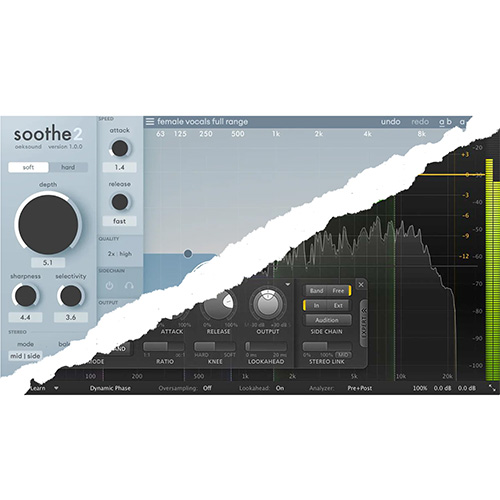
Dynamic EQ → مثلاً: “وقتی ۵kHz خیلی بلند میشود کمی آن کاهش داده شود.”
Multiband Compressor → فشردهسازی تنها باندهای فرکانسی خاصی.
پلاگینهایی مانند Soothe2 یا Oeksound Spiff، که در کنترل هارمونیک تخصص دارند.