What is Stereo Imaging and Panning?
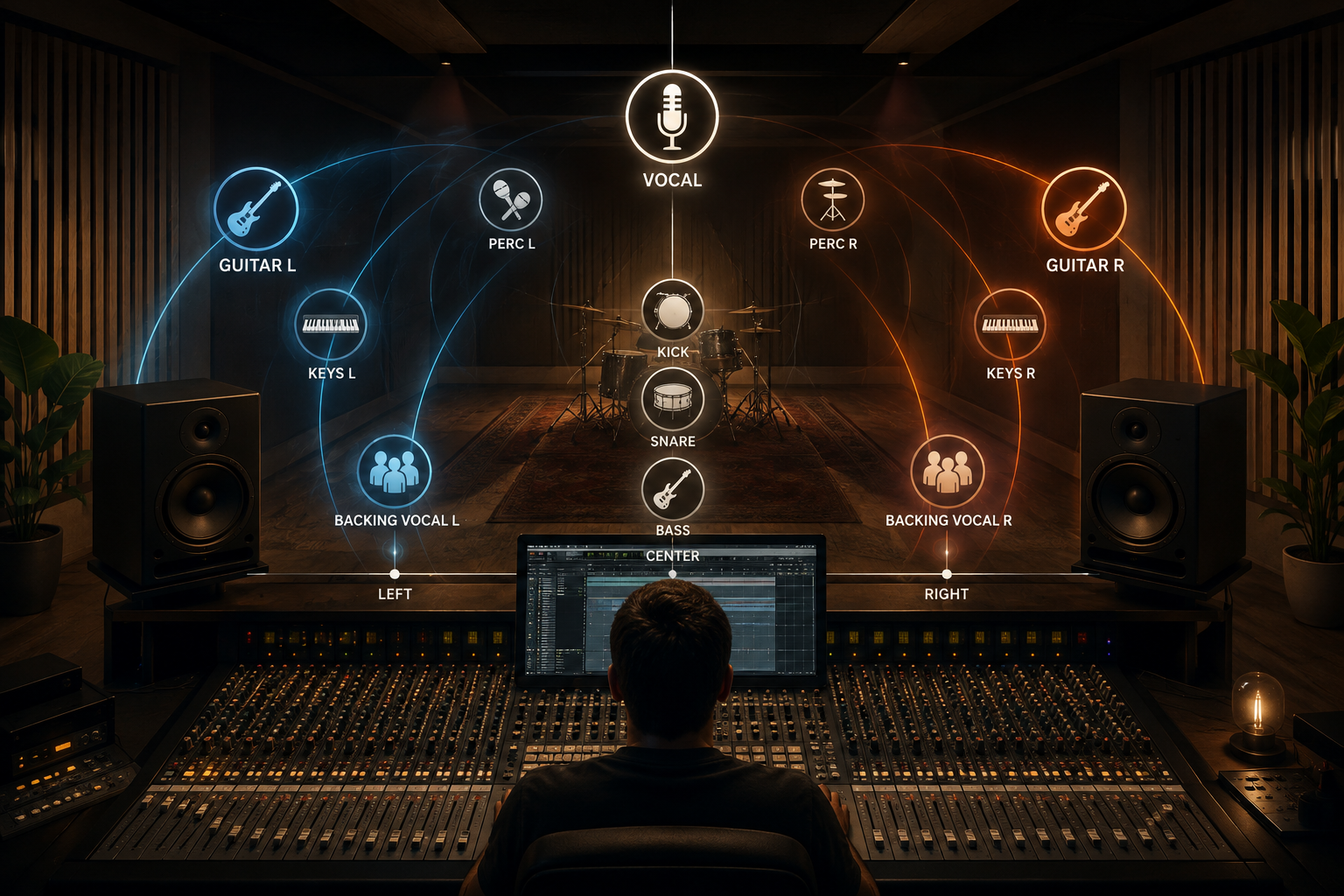
Stereo imaging is the sense of width, space, and placement a mix has when heard through two speakers or headphones — where each element sits, how wide the mix feels, and how the whole picture comes together. Panning is the specific tool used to place a mono sound anywhere between the left and right speakers. Panning is one of the tools that builds stereo imaging, but imaging itself is the bigger picture — the full stereo "canvas" a mix is painted on.
What Does Panning Actually Do?
Every mono track — a single vocal take, a bass, a single mic'd instrument — is, by default, centered equally between both speakers. Panning moves that signal's apparent position anywhere from hard left to hard right by adjusting the relative volume sent to each speaker. A guitar panned 30% left plays louder in the left speaker than the right, so your ear perceives it as coming from that direction, even though it's really just two speakers playing at different volumes.
Why Panning Matters
Without panning, every instrument competes for the same central space, and a mix full of guitars, keys, and background vocals all sitting dead-center becomes cluttered and two-dimensional no matter how well it's EQ'd. Spreading elements across the stereo field does three things at once: it creates physical separation so instruments in similar frequency ranges don't mask each other as badly, it makes a mix feel wider and more immersive, and it gives the listener's ear a sense of space, like a real room with instruments in different positions.
What Should Stay Centered?
Certain elements are almost always kept centered, because moving them off-center creates problems:
- Lead vocal — the focal point of most mixes; panning it off-center feels unnatural and unbalanced
- Kick and bass — low frequencies are hard to localize by ear, and keeping them centered maintains mono compatibility and consistent low-end weight
- Snare — usually centered to anchor the rhythm alongside the kick
Everything else — guitars, background vocals, percussion, synths, doubled parts — is generally where panning does the most work, spreading these elements out so the lead vocal and rhythm section have room to sit clearly in the center.
What is Stereo Width, and Why Can It Be a Problem?
Beyond simple left-right panning, many tools (stereo wideners, doubling, chorus effects) can make a sound feel wider than a simple pan allows — spreading its frequency content or timing subtly across the stereo field. Used well, this adds a sense of scale and polish. Overused, it creates two serious problems:
- Phase cancellation — when a widened signal is summed to mono (as happens on many phones, laptop speakers, and some club systems), parts of it can cancel out, causing thin or missing content.
- A hollow center — pushing too much energy to the sides can leave the middle of the mix feeling empty, weakening exactly the elements (vocal, bass) that need to feel strong and present.
Always Check Mono Compatibility
Because a meaningful amount of listening still happens in mono or near-mono conditions, it's standard practice to check how a mix collapses to mono before finalizing it. If key elements disappear or weaken significantly in mono, the stereo image is doing more harm than good, and panning or widening choices need to be revisited.
Conclusion
Panning is the basic building block; stereo imaging is the complete picture it helps create. Used with intention — keeping the anchors (vocal, kick, bass) centered and spreading supporting elements outward — panning turns a flat, cluttered mix into one that feels wide, spacious, and three-dimensional, without sacrificing clarity or mono compatibility.
Want a mix with a wide, professional stereo image that still translates perfectly to mono? Order online here →