What is Sidechain Compression and Why Is It Used in Pop and Rap?
What is Sidechain Compression and Why Is It Used in Pop and Rap?
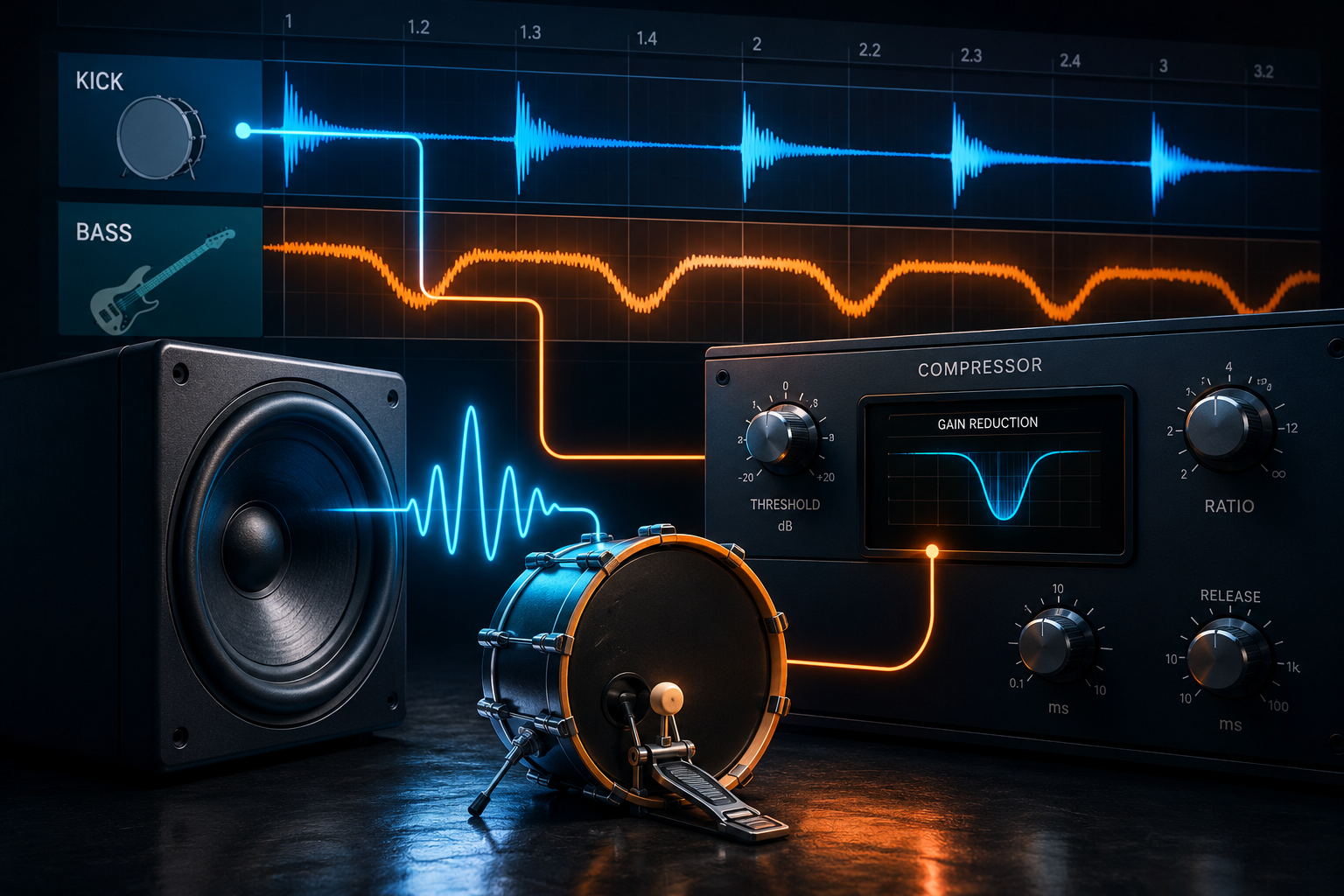
Sidechain compression is a technique where a compressor on one track is triggered not by its own volume, but by the volume of a different track. In other words, instead of a compressor reacting to itself, it reacts to something else — most commonly, a kick drum "ducking" the volume of a bass or synth every time it hits. This is the exact source of the pumping, breathing sound heard throughout modern pop, EDM, and rap production.
How Does It Actually Work?
A normal compressor has one input: the same signal it's compressing. Sidechain compression adds a second input — the "sidechain" or "key" signal — which controls when the compressor activates, without that signal being heard directly.
The most common setup: a compressor is placed on the bass track, but its sidechain input is fed by the kick drum. Every time the kick hits, the compressor briefly pulls the bass volume down, then lets it spring back up once the kick's hit has passed. The result: the kick always cuts through clearly, the bass never fights it for space, and the two lock together rhythmically instead of clashing.
Why This Matters in Pop and EDM
In dense pop and electronic productions, the kick and bass often occupy the exact same low-frequency range. Without sidechaining, they mask each other — the kick loses its punch, the bass turns to mud, and the low end feels weak despite being loud. Sidechain compression solves this without any EQ trickery: by making space for the kick in time instead of in frequency, both elements stay clear. The pronounced "pumping" sound — where the whole track seems to breathe in rhythm with the kick — is often used deliberately as a stylistic effect in EDM, house, and pop, not just a technical fix.
Why This Matters in Rap and Hip-Hop
In rap and hip-hop production, 808 basslines are a core part of the sound, and they often sustain for a long time under the beat. Without sidechaining, a sustained 808 note competing with the kick creates a muddy, undefined low end where neither element is clearly heard. A subtle sidechain from the kick to the 808 keeps the kick's attack sharp and present while letting the 808's low-end weight come through in between hits — this is one of the main reasons modern trap and hip-hop beats sound tight and controlled in the low end even with very heavy bass content.
Setting It Up: The Basics
- Place a compressor on the track you want ducked (usually bass or 808)
- Route the kick drum's signal into that compressor's sidechain input
- Set a fast attack so the ducking happens immediately when the kick hits
- Set the release to match the tempo — fast enough that the bass recovers before the next kick hit, but not so fast that it sounds choppy
- Adjust the ratio and threshold to control how deep the ducking effect is — subtle for a clean fix, extreme for the pronounced pumping effect
Conclusion
Sidechain compression isn't just a trick for EDM pumping effects — it's a fundamental tool for solving low-end conflicts between kick and bass in almost any genre. Whether you want it audible as a stylistic effect or invisible as a technical fix, understanding how it works gives you control over one of the most common mixing problems in modern production.
Want your kick and bass locked together with a clean, professional sidechain setup? Order online here →