What is Mixing Room Acoustics? Full Guide
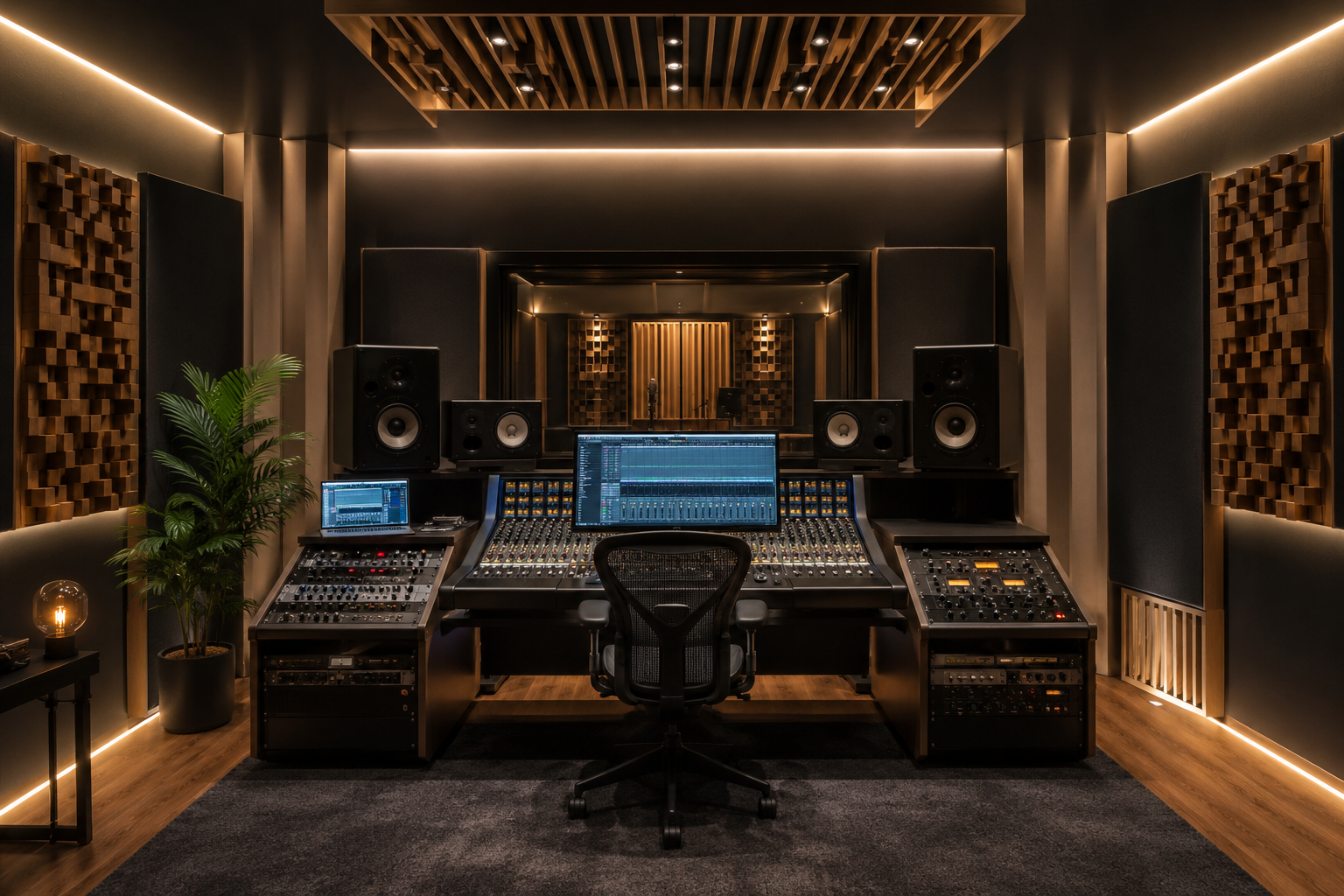
What is Mixing Room Acoustics?
Acoustics refers to how sound waves behave inside an enclosed space — how sound reflects, gets absorbed, or resonates within a room. Every room, whether we want it to or not, affects the sound we hear inside it, because walls, ceiling, floor, and even furniture cause sound waves to bounce multiple times before reaching our ears. Good acoustics means these reflections are controlled and balanced, not that they color the sound or give us false information.
Characteristics of a Mixing Room's Acoustics
The mixing room is where the audio engineer makes critical decisions about frequency balance, panning, and loudness. That's why the room's acoustics must let you hear the true sound, not a sound distorted by the room itself. The most important characteristics of a good mixing room:
- Flat Frequency Response: The room shouldn't boost or cut any frequency; otherwise the mix engineer might think a frequency is too low or too high, when the problem is actually the room.
- Controlled Room Modes: The room's dimensions cause certain low frequencies to resonate (this is exactly why bass traps are installed).
- Short, Balanced Reverberation Time (RT60): The room shouldn't have excessive echo; sound needs to decay quickly for clarity.
- Acoustic Symmetry: The distance of the speakers from the side walls and the listening position must be symmetrical so the stereo image is heard correctly.
- Balanced Absorption and Diffusion: A mix of absorptive and diffusive panels — not just full absorption (which makes the room "dead") and not excessive reflection either.
Difference Between Recording Room and Mixing Room Acoustics
Many people think one good acoustic room works for everything, but the Recording (Live) Room and the Mix (Control) Room serve completely different purposes:
| FeatureRecording RoomMix Room | ||
| Main purpose | Capturing a clean sound of an instrument or vocal | Hearing the mixed audio accurately and objectively |
| Sound reflection | Some controlled reflection is desirable (adds space and character) | Should have minimal reflection so mixing decisions are accurate |
| Microphone | Plays a key role; room acoustics directly affect the recorded sound | Not relevant; only the monitors and the engineer's ears matter |
| Sound isolation | Must fully block outside noise for a clean recording | Isolation matters too, but the main goal is monitoring clarity, not just silence |
| Design | Can be designed according to the musical style (live, warm, dry); acoustic character variation is acceptable | Should be as neutral and characterless as possible; acoustic variation here is the enemy of accuracy |
Conclusion
Unlike a recording room, a mixing room's acoustics shouldn't add any character or color to the sound. The goal of a mix room is to act like a "transparent window" so the engineer hears exactly what's in the audio file — nothing added, nothing removed. That's why before investing in expensive monitors or plugins, it's better to fix the mixing room's acoustics first — because without proper acoustics, even the best monitors will give you the wrong sound.
Want your song mixed and mastered with standard acoustics and professional monitoring? Order online here →